The Future of Autonomous Construction: Robots, AI, and the Self-Managing Job Site
The image of a construction site has remained remarkably consistent for generations. Workers in hard hats and high-visibility vests, heavy equipment operated by skilled operators, materials staged in complex choreographies of delivery and installation, everything coordinated through radio calls and daily planning meetings. The tools have become more powerful, the safety standards have improved, and the data capture has expanded dramatically — but the fundamental model of human labor organizing human labor to physically build physical things has not changed in its essentials.
That is beginning to change. Autonomous robots capable of performing physical construction tasks, AI systems that can make real-time project management decisions, and digital infrastructure that can connect physical site conditions to planning systems in real time are converging toward a future that will look meaningfully different from the job sites of today. The pace of this transformation is uncertain, and the full realization of autonomous construction is measured in decades rather than years. But the trajectory is clear, and the first signs of what is coming are already visible on advanced job sites around the world. Understanding this trajectory is essential for construction professionals who want to be prepared for the industry they will be working in over the next twenty years.
Robotic Construction: Current State
Construction robotics has advanced significantly in the past decade, moving from laboratory demonstrations to working deployments on real projects. Several categories of robotic capability are now commercially available and increasingly deployed. Autonomous mobile robots (AMRs) can navigate construction sites to perform inspection, surveying, and material transport tasks. These robots — exemplified by Boston Dynamics' Spot robot and similar platforms — carry sensor payloads (cameras, LiDAR, thermal sensors) and can execute programmed inspection routes, capturing consistent data from the same locations at specified intervals.
Bricklaying robots represent one of the most advanced demonstrations of robotic construction capability. SAM (Semi-Automated Mason), developed by Construction Robotics, can lay brick at rates several times faster than human masons, with consistent mortar application and placement accuracy. Fastbrick Robotics' Hadrian X system can lay full-size bricks in complex patterns following a CAD design file, with precision that is difficult to achieve manually. These systems do not replace human masons — they require skilled operators and human assistance for setup, corner work, and non-standard conditions — but they dramatically change the productivity calculus for masonry work.
Formwork and concrete robots are emerging for tasks including rebar tying, concrete finishing, and column formwork installation. Rebar tying — the manual process of binding steel reinforcement rods with wire ties — is one of the most physically demanding and injury-prone tasks in construction. Robotic rebar tiers, now commercially available from multiple manufacturers, can perform this work faster and more consistently than human workers, eliminating a major source of musculoskeletal injuries. Concrete finishing robots use GPS and laser guidance to produce floor flatness results that exceed what even skilled human finishers can reliably achieve.
Autonomous Equipment and Machine Control
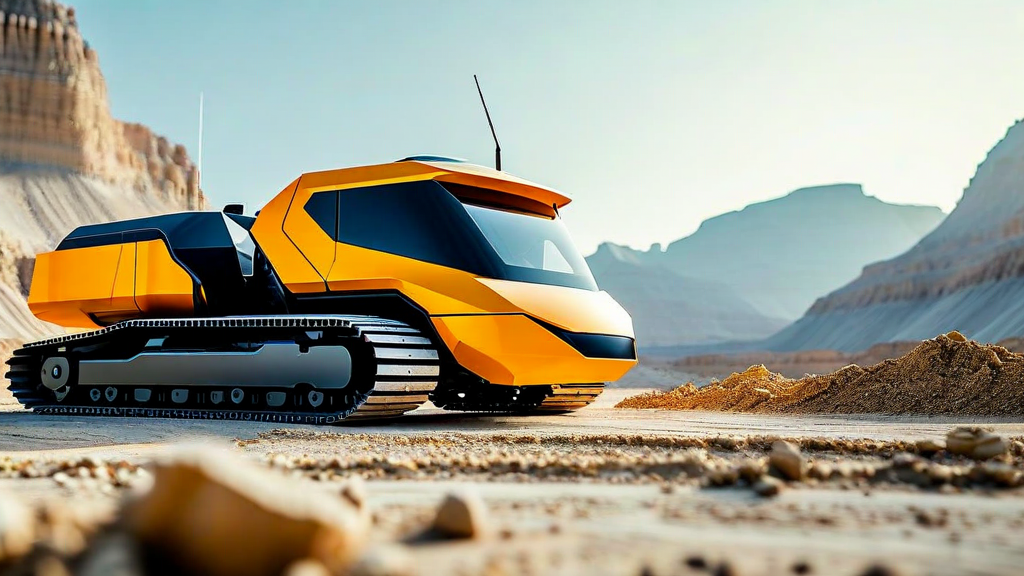
Heavy equipment autonomy is advancing along a parallel track to light robotic systems. The same technologies that are enabling autonomous vehicles — LiDAR, radar, cameras, high-precision GPS, and deep learning — are being applied to the excavators, bulldozers, graders, and compactors that perform the earthwork at the foundation of every construction project. Semi-autonomous grade control systems that guide operators to design elevations using GPS and real-time terrain modeling have been standard on grading equipment for years. The next generation goes further: fully autonomous earthmoving systems that execute design grades without an operator aboard are in commercial testing at multiple sites.
Komatsu's "Smart Construction" initiative and Caterpillar's "Command for Dozing" system represent the leading edge of this capability. In quarry and mining applications — where the operating environment is more controlled and predictable than a typical construction site — fully autonomous haul trucks and dozers have been operating commercially for years. The construction site environment is more complex and less predictable, creating challenges for autonomous systems that are not yet fully solved. But the capabilities are advancing rapidly, and the regulatory and insurance frameworks that will govern autonomous equipment on construction sites are beginning to develop.
AI Project Management: From Assistance to Autonomy
On the project management side, the trajectory from AI-assisted decision-making to AI-autonomous decision-making is more immediately relevant to most construction professionals than robotic physical execution. AI systems that assist human project managers with schedule analysis, risk detection, and cost forecasting are available today and becoming mainstream. The logical extension of these systems — AI that can not only detect problems but autonomously initiate responses — is closer than most people in the industry realize.
Automated procurement is one of the most near-term applications of AI decision autonomy in construction management. When an AI scheduling system detects that a material delivery is at risk of being late and determines that an alternative supplier can meet the required delivery window at an acceptable price premium, the system can be authorized to place a procurement order autonomously within predefined parameters. This level of automation — bounded by human-set rules and escalation thresholds — significantly reduces the response time to supply chain disruptions without requiring continuous human monitoring.
Similarly, AI systems that can autonomously generate and transmit RFIs when they detect design gaps or specification conflicts, update schedule activities when progress data indicates completion, or adjust resource allocations when productivity data indicates that planned rates are not being achieved — all of these represent incremental extensions of AI decision-making autonomy that are technically feasible today and commercially deployable in the near term. The organizational and contractual frameworks for governing these automated decisions are evolving alongside the technology.
The Digital-Physical Interface: Connecting Plans to Execution
The most profound enabler of autonomous construction is not any single robotic or AI capability but the increasingly tight integration between the digital planning environment and the physical execution environment. This integration — the ability to translate a digital design directly into machine instructions for physical execution, and to continuously feed back measurements of physical reality into the digital model — is the foundation on which autonomous construction is built.
Total station robotics and machine control systems have established the basic infrastructure for this digital-physical link in the earthworks and structural work domains. The next generation of digital-physical integration connects a much wider range of construction activities to digital control. Augmented reality guidance that overlays digital construction instructions onto the physical environment enables workers to install complex systems with precision that previously required extensive manual layout and measurement. Automated as-built documentation using photogrammetry and LiDAR creates a continuous digital record of the physical state of the project that can be compared to the design model in real time.
Workforce Transformation and the Human Role
The trajectory toward autonomous construction raises legitimate questions about the role of human workers in the future industry. The construction labor shortage is itself a driver of automation investment — contractors who cannot find enough skilled workers are motivated to develop robotic alternatives. But the relationship between automation and construction employment is more nuanced than a simple displacement story.
Historical experience from other industries that have undergone automation — manufacturing, agriculture, mining — suggests that automation tends to change the composition of the workforce rather than simply reducing its size. The number of workers required to operate and maintain automated systems, to handle the non-standard situations that automation cannot address, and to manage the integration of automated and manual work processes creates new employment categories even as old ones are reduced. Construction will likely follow a similar pattern: less demand for workers performing repetitive physical tasks, more demand for workers with the technical skills to operate, maintain, and supervise automated systems.
Key Takeaways
- Construction robotics is commercially deployed today for inspection, bricklaying, concrete finishing, and rebar tying — with significant productivity and quality advantages in these domains.
- Autonomous heavy equipment is advancing rapidly; semi-autonomous grade control is standard, and fully autonomous earthmoving is in commercial testing.
- AI project management autonomy is advancing incrementally, with near-term applications in procurement, RFI generation, and schedule updating already commercially feasible.
- The digital-physical integration between design models and construction execution is the foundational enabler of autonomous construction at scale.
- Workforce transformation rather than simple displacement is the most likely outcome: automation creates new roles requiring technical skills even as it reduces demand for repetitive physical labor.
Conclusion
The autonomous construction site is not a destination that will be reached in a single leap. It will emerge gradually, sector by sector and task by task, as robotic capabilities mature, AI systems earn the trust of project teams, and the regulatory frameworks governing autonomous systems on construction sites evolve. For construction professionals, the most important response to this trajectory is not anxiety but preparation — developing the technical literacy to understand these systems, the organizational adaptability to integrate them into construction workflows, and the strategic foresight to position their companies to capture the competitive advantages that early adoption will deliver. The future of construction is being built today, and those who help build it will shape it.