Green and Sustainable Construction Technology: The AEC Industry's Climate Imperative
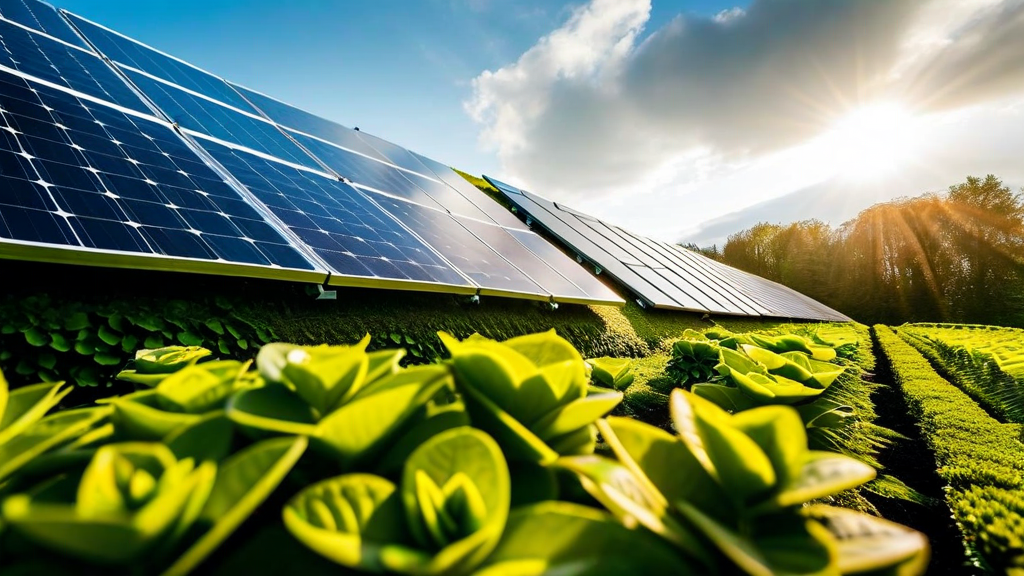
The built environment is responsible for approximately 40% of global energy consumption and 38% of global carbon dioxide emissions. Of that figure, roughly a third is attributable to operational energy use — the energy required to heat, cool, and power buildings over their lifetimes. But an increasingly recognized and increasingly urgent portion of the total comes from the construction process itself: the energy embedded in manufacturing building materials, transporting them to site, and assembling them into finished structures. This "embodied carbon" is carbon that is emitted before a building opens its doors, and given the urgency of climate targets, it is carbon that the industry can no longer afford to ignore.
The construction industry's climate challenge is immense, but so are the opportunities. Green building technology, AI-enabled design optimization, circular material management, and smart building systems are providing pathways to dramatically reduced environmental impact. The question is no longer whether the industry will decarbonize, but how quickly it can move and what technology will enable the transition. This article surveys the key technologies and approaches driving sustainable construction, with attention to how AI is accelerating the impact of each.
Embodied Carbon Accounting and Reduction
Embodied carbon — the greenhouse gas emissions associated with materials and construction processes throughout the full lifecycle of a building — has historically been the invisible portion of the built environment's climate footprint. Operational carbon is measured, reported, and increasingly regulated through energy performance certificates and building codes. Embodied carbon is different: it is emitted before a building is occupied, it is locked in for the building's lifetime, and until recently there were no widely adopted tools or methods for measuring or regulating it.
Environmental Product Declarations (EPDs) are changing this. EPDs are standardized documents that report the environmental impact — including embodied carbon — of specific building products, enabling designers and specifiers to compare the carbon performance of alternative materials on an apples-to-apples basis. AI-powered design tools that integrate EPD data with BIM models can automatically calculate the whole-life carbon budget of a design and generate alternative specifications that reduce embodied carbon while maintaining structural and functional performance. Structural optimization algorithms, for example, can identify ways to reduce concrete and steel quantities in structural systems — often the largest contributors to embodied carbon — without compromising structural integrity or constructability.
Mass timber construction has emerged as one of the most promising pathways to radical embodied carbon reduction. Cross-laminated timber (CLT), glued laminated timber (glulam), and other engineered wood products have structural performance comparable to concrete and steel in many applications, but with a fraction of the embodied carbon. When sourced from sustainably managed forests, mass timber is carbon-sequestering — the wood stores carbon that the growing tree absorbed from the atmosphere. AI-enabled mass timber design tools are expanding the range of building types where timber can replace concrete and steel, accelerating what some researchers call the "mass timber revolution" in construction.
Construction Waste Reduction and Circular Material Management
Construction and demolition waste is the largest waste stream in the United States by weight, exceeding municipal solid waste by a factor of two or more. This waste has both environmental and economic costs: landfill fees, hauling costs, material waste, and the opportunity cost of materials that could have been reused or recycled. AI is providing new tools to reduce construction waste at both the design and execution stages.
At the design stage, AI quantity optimization tools can minimize material waste by optimizing cutting schedules for dimensional materials (steel, lumber, glass, tile) to maximize yield from standard stock sizes. These tools, analogous to the nesting algorithms used in manufacturing, can reduce material waste by 10-20% for certain material categories. BIM-integrated waste estimation tools can project overall waste volumes before construction begins, enabling project teams to plan waste management strategies and set reduction targets.
Digital materials passports — digital records of the materials embedded in a building, their specifications, origin, and condition — enable circular construction at the building lifecycle level. When a building is eventually demolished, materials passports give the demolition contractor and salvagers the information they need to identify and recover valuable materials for reuse or high-grade recycling. AI can help create and maintain these passports by automatically extracting material data from BIM models and project documentation, making the circular economy practical at a scale that manual documentation cannot achieve.
Energy-Efficient Building Systems and Smart Buildings
Smart building technology — building automation systems that use sensors, controls, and AI to optimize the performance of HVAC, lighting, and other building systems in real time — represents one of the most mature and well-documented sustainability technology categories in the built environment. Buildings with advanced automation systems consistently consume 20-40% less energy than comparable buildings with conventional controls. The deployment of AI-powered analytics has extended these savings further, enabling predictive maintenance, occupancy-responsive control, and grid-responsive demand flexibility that conventional building automation cannot achieve.
The construction phase of a smart building project is critical to its long-term energy performance. Systems that are not commissioned properly, controls that are not calibrated correctly, and sensors that are not installed in the right locations will underperform their design intent from the first day of operation. AI-assisted construction quality management can improve smart building commissioning by monitoring systems installation against the design BIM, flagging deviations before they are hidden behind finishes, and guiding commissioning technicians through calibration procedures with AI-verified confirmation of correct settings.
Sustainable Site Management and Environmental Compliance
Construction sites are significant sources of environmental impact beyond their material inputs and outputs. Stormwater runoff from disturbed soils can carry sediment and pollutants into waterways. Construction equipment is a major source of diesel particulate emissions. Noise, light, and dust pollution affect neighboring communities and ecosystems. Managing these impacts requires continuous monitoring, proactive controls, and rigorous documentation — all areas where IoT sensing and AI analytics add significant value.
AI-powered environmental monitoring systems can track stormwater discharge quality, air quality, noise levels, and ground vibration in real time, automatically flagging exceedances of permit limits and generating the documentation required for environmental compliance reporting. Early warning of developing environmental issues — a turbidity spike in stormwater runoff following a rain event, elevated particulate emissions from a fleet of aging diesel equipment — enables project teams to respond before permit violations occur rather than after.
Green Building Certification and Compliance
Green building certification programs — LEED, BREEAM, WELL, Living Building Challenge, and others — provide third-party verification of sustainable building performance and are increasingly required by institutional owners, government agencies, and corporate tenants. The certification process involves substantial documentation: energy modeling, materials specification tracking, construction waste diversion reporting, and commissioning documentation. This documentation burden has historically limited green building certification to projects with the budget and staff to manage the administrative requirements.
AI documentation tools are making green building certification accessible to a broader range of projects. Automated data extraction from project management systems, material submittals, and commissioning reports can populate certification documentation with minimal manual effort. Machine learning models trained on historical certification data can predict which credits a project is likely to achieve based on its design and specification data, enabling early-stage certification strategy optimization. By reducing the cost and effort of certification documentation, these tools make green building certification economically viable on projects where it was previously out of reach.
Key Takeaways
- The built environment accounts for 38% of global CO2 emissions; construction's embodied carbon is a growing focus as operational energy efficiency improves.
- AI-integrated EPD tools and structural optimization algorithms enable dramatic reductions in embodied carbon without compromising structural performance.
- AI quantity optimization can reduce construction material waste by 10-20% for key material categories; digital materials passports enable circular economy at building scale.
- Smart building technology with AI analytics delivers 20-40% operational energy savings; proper construction quality management is critical to realizing design intent.
- AI documentation tools are making green building certification accessible to a broader range of projects by dramatically reducing administrative burden.
Conclusion
The construction industry's climate imperative is clear. Buildings and infrastructure will need to be dramatically less carbon-intensive to meet global climate targets, and the construction process itself must become cleaner, less wasteful, and less polluting. Technology — AI, IoT, digital tools, advanced materials — provides the means. What is needed now is the will to invest, adopt, and continuously improve. The firms that lead on sustainability today will not only contribute to a livable climate future; they will be better positioned for a market in which sustainability performance is increasingly a condition of doing business.