IoT and Real-Time Site Monitoring in Modern Construction
For most of construction history, knowing what was happening on a job site required a person to physically walk to the relevant location and look. Superintendents made their rounds, foremen checked in at daily meetings, and project managers received weekly reports that summarized activities already several days old. This model worked reasonably well when projects were smaller, when crews were more experienced, and when the margin for error was larger. Today, none of those conditions reliably hold.
Modern construction sites are complex, distributed environments where hundreds of workers, dozens of piece of equipment, and multiple active work fronts operate simultaneously. The scale and pace of activity make it impossible for any human observer — no matter how experienced — to maintain situational awareness across the full project. IoT sensors, connected devices, and AI analytics are filling this visibility gap, creating a continuous stream of objective site data that project teams can use to manage their projects in real time rather than in the rear-view mirror of weekly reporting cycles.
The Connected Construction Site: Core Technologies
The foundation of IoT-enabled site monitoring is a network of sensors, cameras, and connected devices that continuously collect data about the physical environment and the activities taking place within it. The most widely deployed sensors in construction today include environmental sensors that measure temperature, humidity, and air quality; structural health monitoring sensors attached to concrete formwork and structural elements; GPS and RFID trackers for equipment and materials; and high-definition cameras that provide visual coverage of key work areas.
Wearable technology is another rapidly growing category. Smart hard hats equipped with sensors can track worker location, detect falls, measure heat stress exposure, and monitor fatigue indicators. Smart vests with embedded sensors can detect proximity to heavy equipment and provide alerts when workers enter exclusion zones. These wearables serve double duty: they generate real-time safety alerts and produce location and productivity data that feeds into project management analytics.
Telematics on construction equipment has been standard on newer machines for years, but the value of this data has historically been underutilized. GPS tracking, engine hours, fuel consumption, idle time, and fault codes are all routinely transmitted by modern excavators, cranes, and other heavy equipment. AI platforms that aggregate and analyze telematics data can detect patterns of equipment underutilization, predict maintenance needs before breakdowns occur, and optimize equipment deployment across multiple projects in ways that reduce costs and improve productivity.
AI-Powered Video Analytics
Camera systems on construction sites have traditionally served a security and documentation function — recording what happened without actively analyzing it. AI-powered video analytics transforms cameras from passive recorders into active intelligence tools. Computer vision algorithms can analyze video feeds in real time to perform tasks that would require continuous human attention to accomplish manually.
Safety compliance monitoring is one of the highest-value applications. AI systems can detect workers not wearing required PPE — hard hats, high-visibility vests, safety glasses, fall harnesses — and generate immediate alerts. They can identify when workers are in proximity to moving equipment, when vehicles are entering pedestrian zones, and when workers are approaching the edges of elevated work surfaces without fall protection. These real-time alerts can prevent accidents before they occur, rather than simply documenting them after the fact.
Productivity analysis through video AI is a more recent application but one with significant potential. By tracking the movement patterns of workers and equipment in specific work areas, AI can estimate productivity rates and flag situations where workflow is disrupted. Construction productivity loss events — workers standing idle waiting for materials, equipment sitting unused while crews are unavailable, workers spending excessive time traveling between activity areas — often manifest as subtle movement pattern changes that are invisible to human observers but detectable by AI.
Structural and Environmental Monitoring
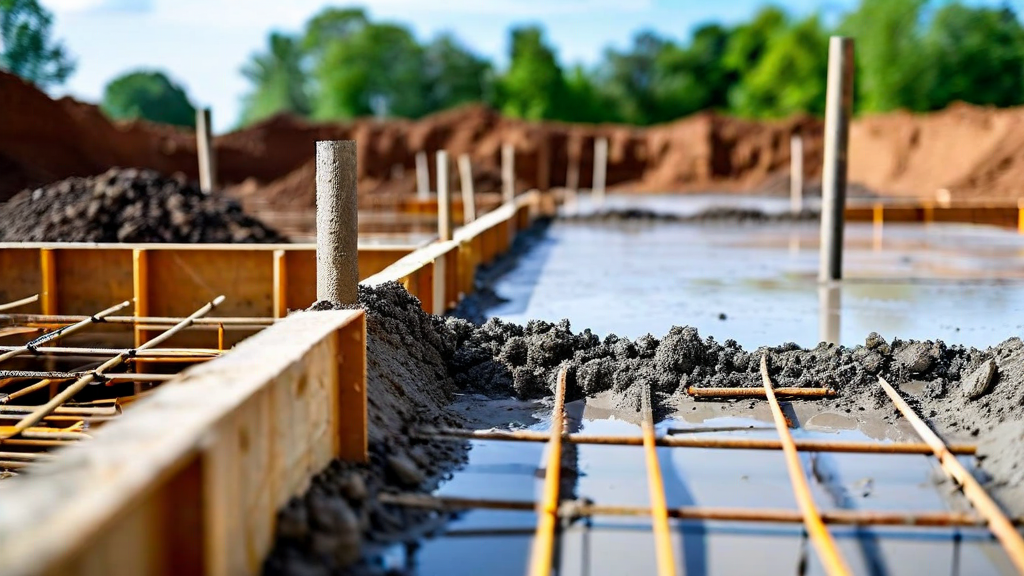
Beyond activity monitoring, IoT sensors play an important role in monitoring the physical condition of structures under construction. Concrete is one of the most sensor-dense materials in modern construction: embedded sensors can track temperature during curing (critical for maintaining strength in extreme weather conditions), measure moisture content, and monitor the evolution of compressive strength in real time. This data allows project teams to make informed decisions about when formwork can be stripped, when loads can be applied, and when construction can resume after weather-related pauses.
Structural health monitoring is equally important in renovation and retrofit projects where work is proceeding in proximity to occupied structures or aging systems. Vibration sensors can detect when construction activities are inducing excessive movement in adjacent structures. Settlement monitors track changes in ground elevation that might indicate foundation movement. Crack propagation sensors on existing structural elements can flag situations where construction-induced stress is creating new damage in structures that need to remain intact.
Air quality and noise monitoring address both regulatory compliance and community relations. Construction sites are significant sources of dust, particulates, and noise pollution that can affect neighboring communities and trigger regulatory enforcement actions. Continuous environmental monitoring allows project teams to respond proactively to pollution events — adjusting work practices, implementing dust suppression, or temporarily curtailing particularly noisy activities — before they generate complaints or violations.
Data Integration and the Site Intelligence Platform
The full value of IoT site monitoring is realized when sensor data is integrated with the other data streams flowing through a construction project — the schedule, the cost model, the BIM, the daily logs, and the subcontractor reporting. In isolation, a sensor reading that indicates equipment is idle tells you that equipment is idle. In the context of the project schedule, the same reading tells you that a critical path activity is at risk because the equipment needed to execute it is not being deployed. In the context of the cost model, it tells you what that idle time is costing the project per hour.
AI platforms that integrate these data streams can generate contextually rich insights that no single data source could provide on its own. Machine learning models trained on historical project data can recognize patterns that precede cost overruns or schedule delays — for example, the pattern of equipment idle time, crew absenteeism, and subcontractor schedule deviation that historically precedes a major scope conflict. When these patterns appear in real-time site data, the AI can flag them for management attention days before a human observer would recognize the problem.
Implementation Strategy and ROI
Implementing a comprehensive IoT site monitoring program requires thoughtful planning. The range of available technologies is broad, and deploying everything everywhere is neither practical nor cost-effective. A phased approach that begins with the highest-value use cases — typically safety compliance monitoring and equipment telematics — and expands over time as the organization builds capability and demonstrates ROI is generally more successful than a comprehensive all-at-once deployment.
The ROI case for IoT site monitoring is strong and growing stronger as sensor costs continue to fall. A single prevented fall can save hundreds of thousands of dollars in workers' compensation, medical costs, legal fees, and OSHA penalties. Equipment utilization improvements of 10-15%, which AI telematics programs routinely deliver, translate directly to reduced equipment rental costs on large projects. Schedule improvements from early delay detection compound across multiple projects into significant competitive advantage. The data and analytical capabilities built through IoT programs also have long-term value as training inputs for AI models that will improve in accuracy and capability with every project they observe.
Key Takeaways
- IoT sensors, wearable technology, and connected equipment telematics create a continuous real-time data stream from the construction site.
- AI-powered video analytics enables automated safety compliance monitoring and productivity analysis without continuous human oversight.
- Structural and environmental sensors provide objective monitoring of physical conditions critical to quality and safety.
- Full site intelligence value is realized when IoT data is integrated with the project schedule, cost model, and BIM in a unified platform.
- A phased implementation starting with highest-ROI use cases (safety, equipment telematics) delivers faster payback and builds organizational capability.
Conclusion
The connected construction site is no longer a concept from the future — it is a present reality for leading contractors who understand that competitive advantage in construction increasingly depends on data. The project teams that invest in IoT monitoring and AI analytics today are building not just better projects, but better organizations: organizations that learn from every project, improve their processes continuously, and manage risk with a precision that was simply not achievable before the connected site era. In an industry where margins are thin and the consequences of surprises are severe, that capability is not optional. It is essential.